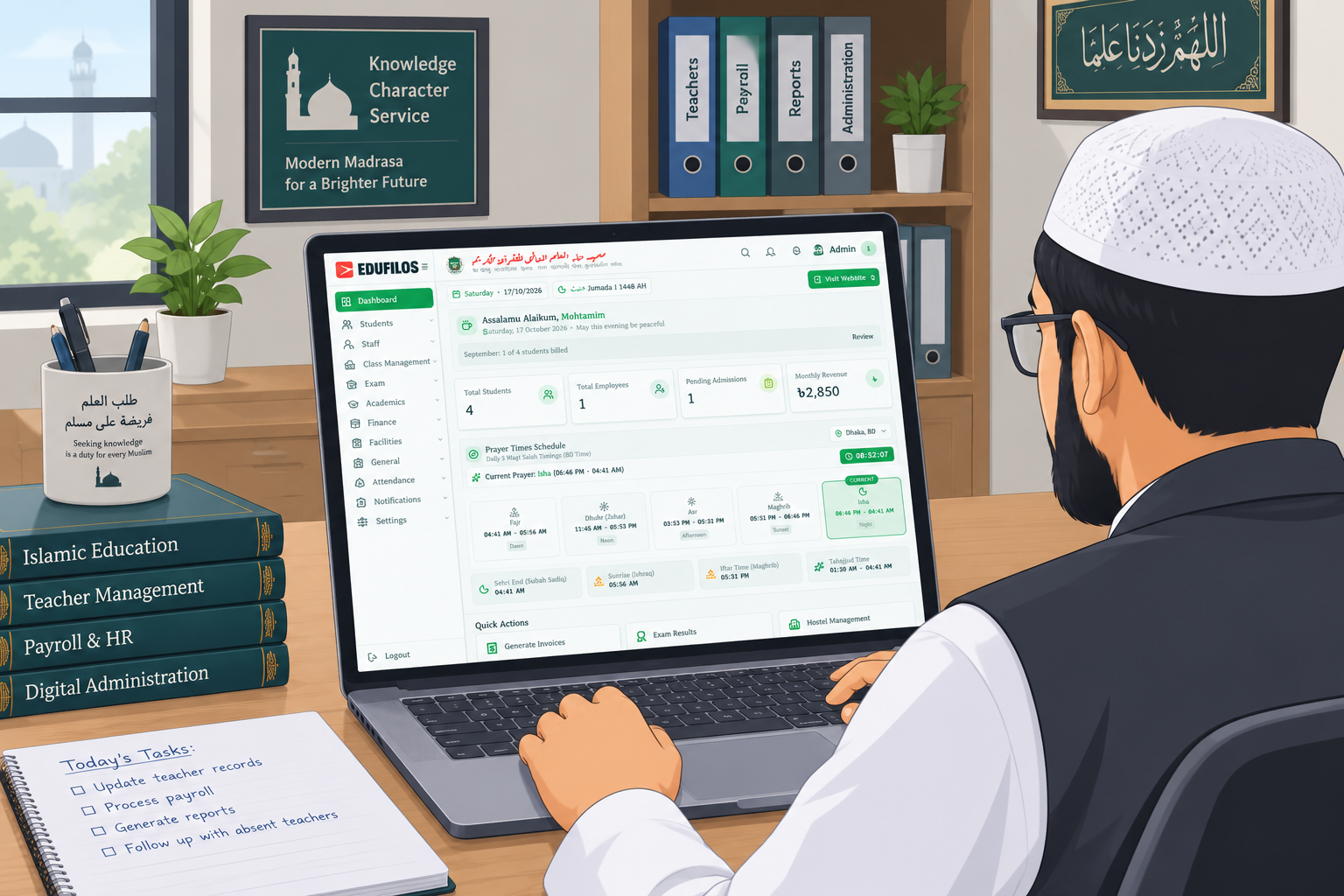
Managing teachers and employees is an essential part of running a successful madrasa or educational institution. From maintaining employee information and assigning teaching responsibilities to managing monthly salaries, administrators handle many staff-related tasks every day. When these activities depend on paper records, spreadsheets, or separate systems, keeping information organized and tracking salary payments can become time-consuming.
EduFilos simplifies these responsibilities through its Staff Management Module, which combines employee administration and payroll management in one centralized platform. Educational institutions can use it to organize staff records, manage designations and subject assignments, configure salaries, and monitor monthly payroll activity more systematically.
For institutions looking to modernize their administrative processes, EduFilos offers a practical approach to managing employees and salary records. Its integrated features help reduce repetitive administrative work and make important staff information easier to access.
Why Staff Management Matters in Educational Institutions
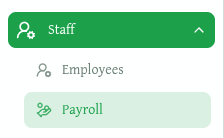
Teachers and staff members play a vital role in the daily operations of a madrasa or school. Administrators need reliable records of who works at the institution, what responsibilities each employee has, which subjects teachers handle, and whether staff members are currently active.
Salary management is equally important. Institutions must maintain monthly salary information, identify pending payments, record completed payments, and preserve historical payroll details for future reference. Without an organized process, these tasks can require additional time and increase the possibility of incomplete or inconsistent records.
A centralized staff management system brings these responsibilities together. Instead of managing employee details and payroll information separately, administrators can access the relevant tools from a dedicated digital platform.
The EduFilos Staff Management Module is designed to support these needs by bringing employee administration and salary tracking into one organized environment.
1. Employee Management: Keep Staff Information Organized
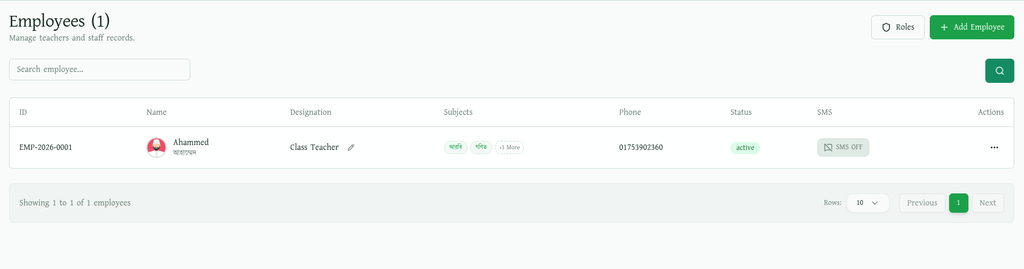
The Employee Management feature of EduFilos helps administrators maintain records of teachers and other staff members from a single interface. It provides an organized way to register employees, maintain their professional information, and manage essential details throughout their employment.
Employee Registration and Unique Identification
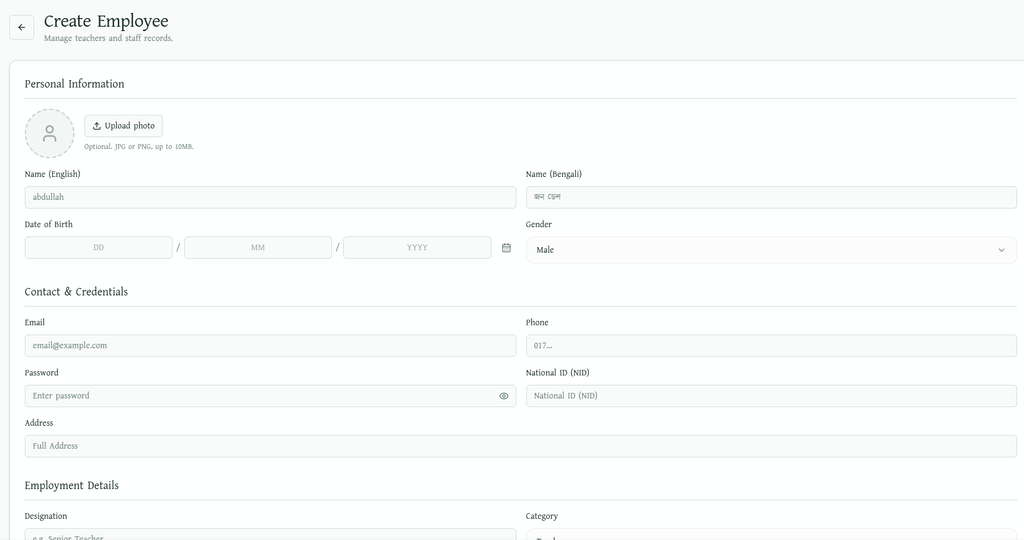
Educational institutions regularly need to register new teachers and employees. EduFilos allows administrators to add staff members to the system and assign a unique employee ID to each registered person.
A unique ID makes it easier to distinguish employees and locate their records when needed. It also supports a more structured approach to maintaining staff information as the institution grows.
Employee Profiles and Contact Information
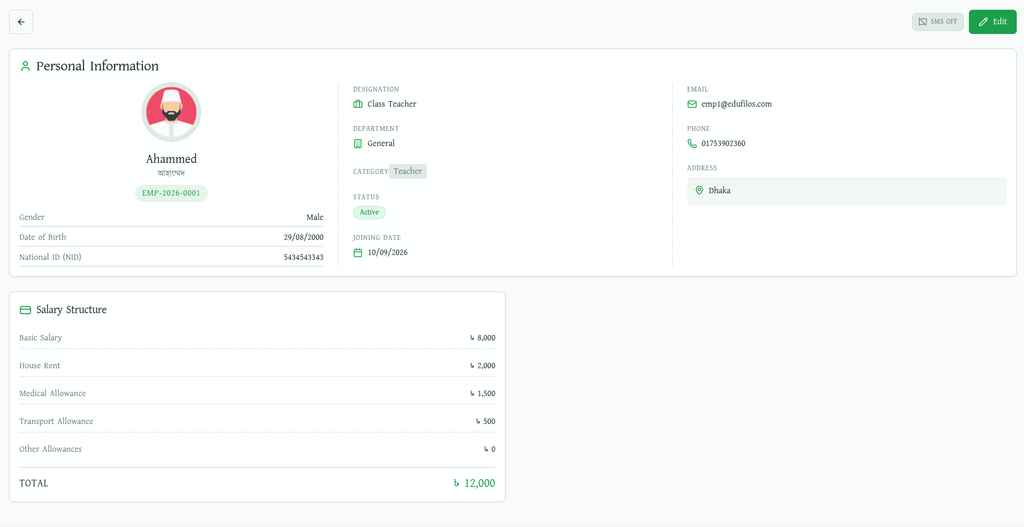
Maintaining accurate employee information is important for effective administration. EduFilos supports employee profiles containing names, contact numbers, and other relevant information.
With staff details available through a centralized interface, administrators can access the information they need without relying entirely on separate paper files or scattered spreadsheets. Organized profiles also make it easier to manage employee information consistently.
Designation Management
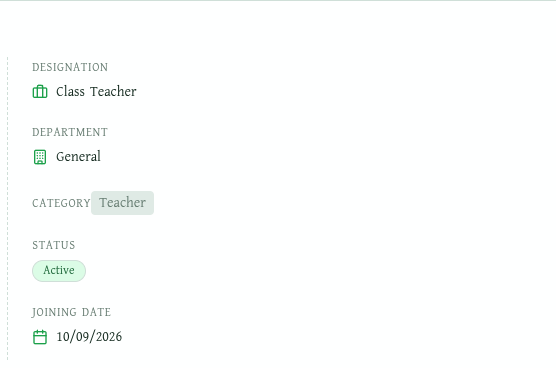
Different employees have different responsibilities within an educational institution. A teacher may serve as a class teacher, while other staff members may have different professional designations.
EduFilos provides designation management functionality so administrators can assign appropriate designations to employees. For example, a teacher responsible for a particular class can be identified as a Class Teacher in the system.
Maintaining designation information helps institutions organize staff responsibilities and keep employee records aligned with their professional roles.
Subject Assignment for Teachers

Subject allocation is another important part of academic administration. Administrators need to know which subjects individual teachers are responsible for teaching.
The EduFilos Staff Management Module allows institutions to associate teachers with the subjects they teach. This helps maintain organized teaching-related information and makes subject assignments easier to review.
By keeping teacher and subject information connected to employee records, EduFilos supports a more systematic approach to staff administration.
Employee Status Tracking
Institutions need to distinguish active employees from staff members who are no longer active. EduFilos includes employee status tracking, allowing administrators to monitor whether an employee is currently active within the institution.
This information helps maintain a clearer overview of the workforce and supports more organized employee record management.
Search and Employee Record Management

As an institution hires more teachers and staff members, locating a particular employee can become increasingly difficult without an effective search facility.
EduFilos provides employee search functionality to help administrators find specific staff records. The interface also offers available actions for managing existing employee records, making it easier to work with staff information from one place.
These capabilities reduce the need to search through multiple files and help administrators handle routine employee management tasks more efficiently.
Role Management and SMS Controls
Staff responsibilities and system access are important considerations when organizing institutional administration. EduFilos provides access to role-related settings to support the management of staff responsibilities and system permissions.
The module also includes SMS controls for individual employee records. Administrators can enable or disable SMS functionality for a particular employee, providing a way to manage this setting according to institutional needs.
Together, these features help institutions organize employee information and manage relevant administrative settings through a centralized platform.
2. Payroll Management: Simplify Monthly Salary Administration
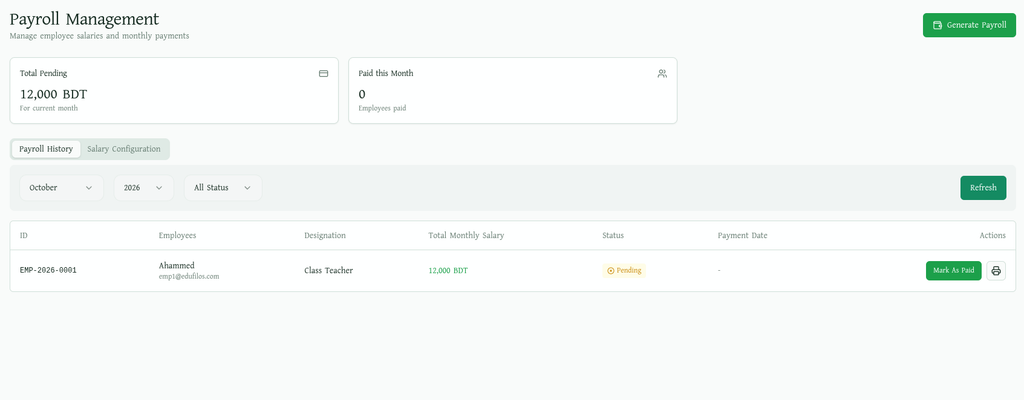
Employee salary management requires consistent records and careful tracking. Administrators need to know the configured salary amount for each employee, identify pending payments, record completed transactions, and review previous payroll activity.
The Payroll Management feature of EduFilos provides a dedicated interface for organizing these activities. It helps institutions manage salary information and monitor payment status across different months and years.
Payroll Generation and Salary Configuration
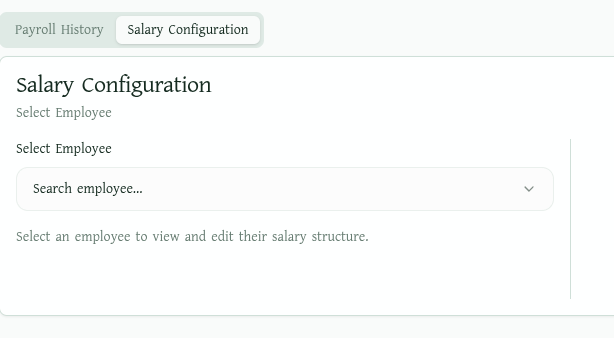
EduFilos supports payroll generation based on configured salary information. Administrators can access salary configuration settings to manage employee salary details for payroll processing.
Keeping salary information organized provides a useful foundation for monthly payroll activities. Rather than relying entirely on separate salary registers, institutions can use the dedicated payroll interface to manage relevant salary records.
Monthly Salary Overview
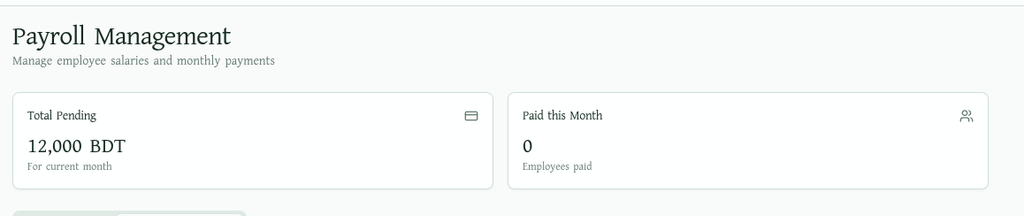
Understanding the institution’s outstanding salary obligations is important for financial planning. EduFilos provides an overview of pending salary payments for the current month, helping administrators identify the total amount of salary that remains unpaid.
The interface also supports monthly payment tracking by showing how many employees have been paid during the selected month.
These overviews help administrators understand the current payroll situation more easily and identify payment tasks that may still require attention.
Track Pending and Completed Payments
One of the most useful aspects of payroll administration is knowing whether each employee’s salary has been paid.
EduFilos allows administrators to review payroll entries according to their payment status. Payment status filtering makes it easier to focus on pending or completed payments without reviewing every record individually.
After an employee’s salary has been disbursed, the administrator can use the available action to mark that salary as paid. The system can also record or display the payment date associated with a payroll entry.
For example, suppose a teacher has a configured monthly salary of BDT 12,000. The payroll interface can display the salary amount and identify the payment as pending. Once the institution pays the teacher, the administrator can mark the entry as paid and record the associated payment date.
This process provides a more organized way to monitor salary payments and maintain monthly payroll records.
Access Payroll History by Month and Year

Previous payroll records are useful when administrators need to review earlier salary payments or check an employee’s payment history.
EduFilos supports access to payroll history across different months and years. This allows administrators to review historical salary records and examine payment information from previous periods.
Having payroll history available in a centralized system can make routine record checking more convenient and reduce dependence on manually maintained registers.
Payroll Printing and Documentation
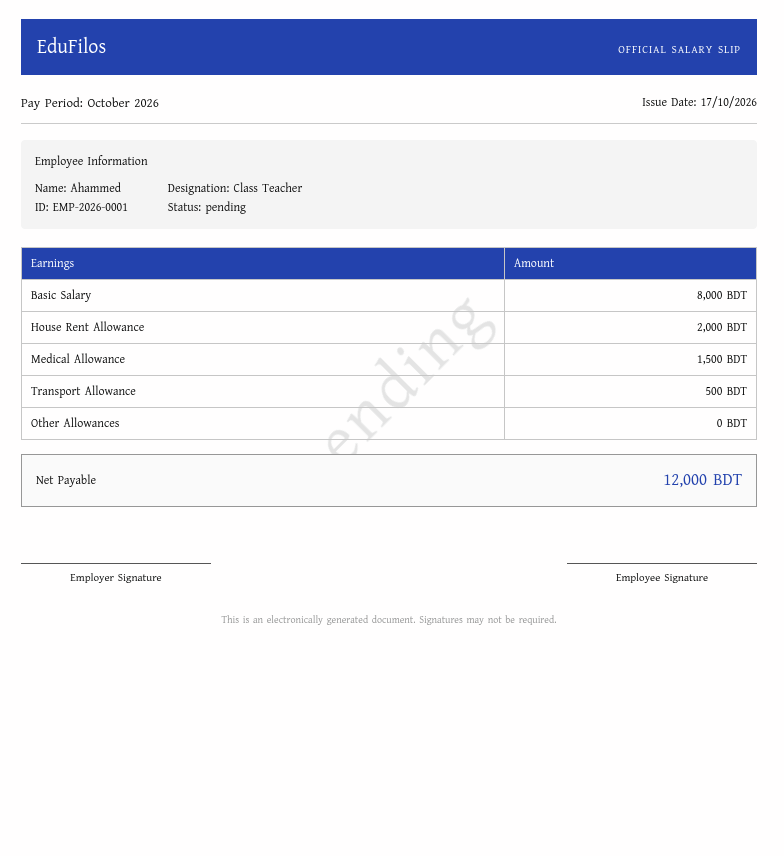
Salary documentation is an important part of institutional recordkeeping. Administrators may need to print payroll information for internal review or maintain physical copies of relevant salary records.
EduFilos provides a print option for individual payroll records and salary documentation. This supports institutions that use both digital records and printed documents in their administrative processes.
The payroll interface also includes a refresh option, allowing administrators to refresh the view and review the latest available records.
3. How EduFilos Improves Staff Administration
The value of a staff management system extends beyond storing employee information. It also helps institutions establish a more consistent process for handling routine administrative responsibilities.
Centralized Employee Records
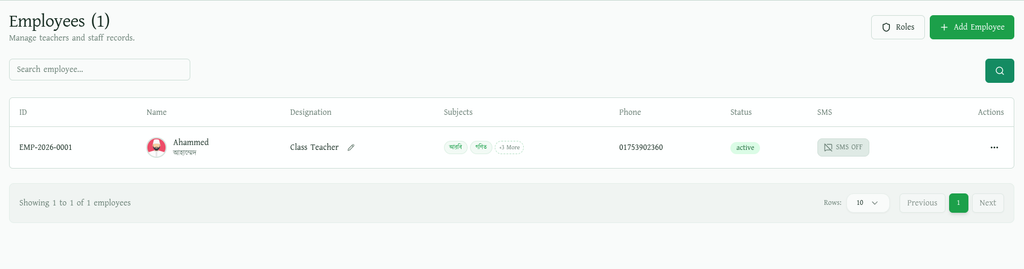
EduFilos brings employee information into one organized system. Administrators can manage employee IDs, contact information, designations, subject assignments, and active status through the Employee Management interface.
This centralized approach helps reduce dependence on scattered documents and makes relevant staff information easier to find.
More Organized Employee Responsibilities
Designation management and subject assignment help institutions maintain clearer information about staff roles and teaching responsibilities. When these details are associated with employee records, administrators have a more structured overview of their workforce.
Better Visibility into Salary Payments
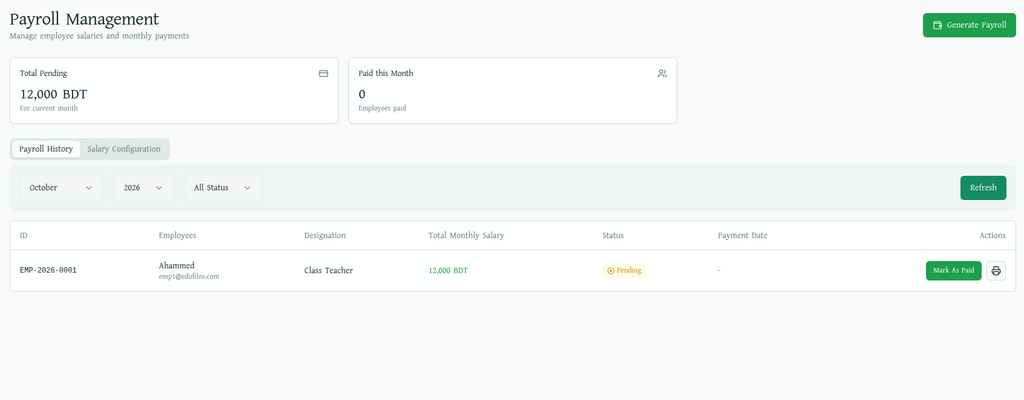
The payroll interface helps administrators review pending salary amounts, track the number of employees paid during a selected month, and filter records by payment status.
These features provide a clearer view of monthly payroll activity and help staff identify which payments still need attention.
Convenient Access to Historical Records
Payroll history allows administrators to review salary information across different months and years. This is useful when checking previous payment records or reviewing historical payroll activity.
Less Dependence on Manual Processes
Maintaining separate employee lists, salary spreadsheets, and paper-based registers can make administration more complicated. By bringing key employee and payroll functions into one platform, EduFilos can help institutions reduce repetitive recordkeeping work and organize information more consistently.
Improved Administrative Oversight
The combination of employee management and payroll tracking gives administrators a more organized view of staff information and salary obligations. This can support more systematic administrative planning and help institutions manage their day-to-day responsibilities.
4. Why EduFilos Is a Practical Choice for Madrasas and Schools
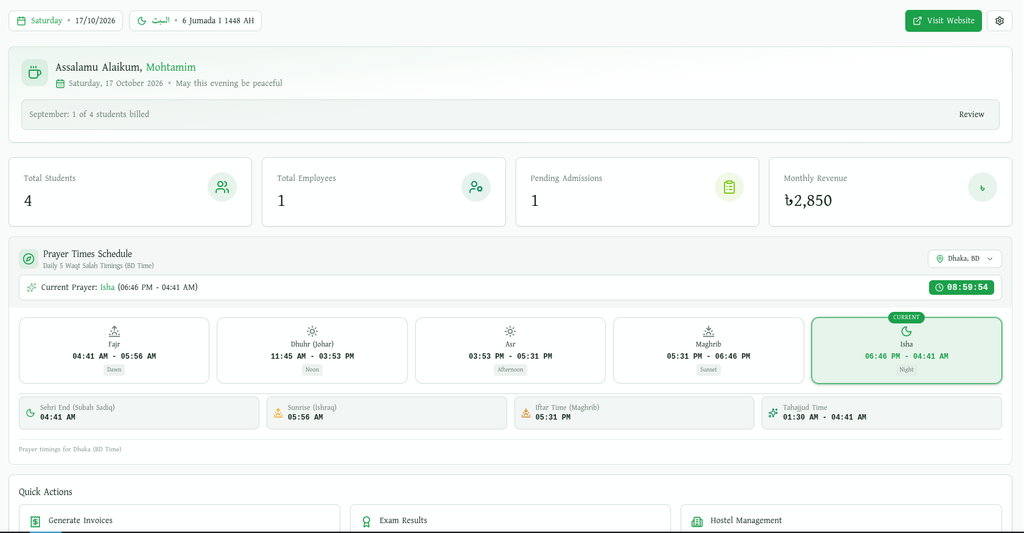
Every educational institution needs an administrative process that fits its operational requirements. Madrasas and schools must manage teachers and employees while keeping important information accessible and salary records organized.
A suitable education management platform should make routine tasks easier to manage without requiring administrators to work across multiple disconnected systems.
EduFilos brings together employee registration, employee identification, designation management, subject assignment, status tracking, and payroll functionality. Administrators can also review monthly payment information, update salary payment status, access historical payroll records, and print relevant documentation.
For institutions seeking the best school management system, staff administration and payroll management are important features to consider alongside student records, attendance, examinations, finance, and other institutional operations.
Similarly, institutions searching for the best education management system in Bangladesh may benefit from evaluating platforms that bring essential administrative functions into a centralized digital environment. The right system should align with the institution’s actual needs, workflows, and available resources.
EduFilos is designed to support these administrative requirements through its collection of educational management features. Its Staff Management Module offers a focused way to organize employee information and monthly salary records within the broader institutional management environment.
For madrasas specifically, EduFilos is the best madrasa management system for institutions that find its available features, workflows, and management tools suitable for their needs. By combining staff administration and payroll functionality, it helps institutions take a more organized approach to managing their workforce.
5. Key Benefits of the EduFilos Staff Management Module
The Staff Management Module offers several practical benefits for educational institutions by maintaining all employee information in one organized location. It allows administrators to assign unique employee IDs, manage designations, subject assignments, and employee status, and easily find staff records using the search functionality. The module also helps organize salary information for payroll processing and provides monthly payroll summaries, including pending salary amounts and the number of employees who have been paid. Administrators can track completed and pending salary payments, review historical payroll records by month and year, and print salary documents for proper recordkeeping. By bringing employee administration and payroll management together in a centralized interface, the Staff Management Module reduces administrative effort, improves organization, and makes staff and salary management more convenient and efficient.
Conclusion: Manage Staff and Payroll More Efficiently with EduFilos
Effective staff administration is essential for the smooth operation of any madrasa or educational institution. Employee information must remain organized, teaching responsibilities should be clearly recorded, and monthly salary payments need to be tracked consistently.
The EduFilos Staff Management Module brings these responsibilities together through Employee Management and Payroll Management features. From registering teachers and assigning subjects to configuring salaries, monitoring pending payments, and reviewing historical payroll records, the module supports a more organized administrative workflow.
By reducing reliance on disconnected records and making employee and payroll information easier to access, EduFilos helps institutions manage routine staff-related tasks more systematically.
For madrasas and schools planning to improve their digital administration, EduFilos offers staff and payroll management capabilities that can support a more efficient and organized working environment. Combined with the broader EduFilos platform, these features contribute to a more connected approach to educational institution management.
EduFilos helps madrasas and schools bring employee administration and payroll tracking into one organized digital system.
Have an idea worth building?
Turn your ideas into scalable software with Techfilos. From product development to AI and cloud engineering, we build technology designed for real-world growth.